Bifold door configurations: How to choose the right layout
Once you’ve made the choice to install bifold doors, regardless of whether the main draw was their natural light intake, the views they provide, or their ability to let natural light in, attention will soon shift towards the configuration you pick.
Indeed, when you begin the process of looking into bifold door configurations, it can seem daunting. Traffic doors, panel counts, and stacking directions are all important things to consider, so we’ve put this blog together to explain what it all means, whilst hopefully making clear which options are right for you.
Bifold door configurations: What does it all mean?
When you see a bifold door described as “3+0” or “2+2,” it’s a simple shorthand telling you how many panels are in the door set and how they stack when open.
So, a 3+0 has three panels folding to the same side. A 2+2 has four panels total, two folding left and two folding right. Here’s a quick overview of the most common configurations:
- 2+0 – Two panels, both folding to one side
- 1+1 – Two panels opening from the centre, similar in feel to French doors
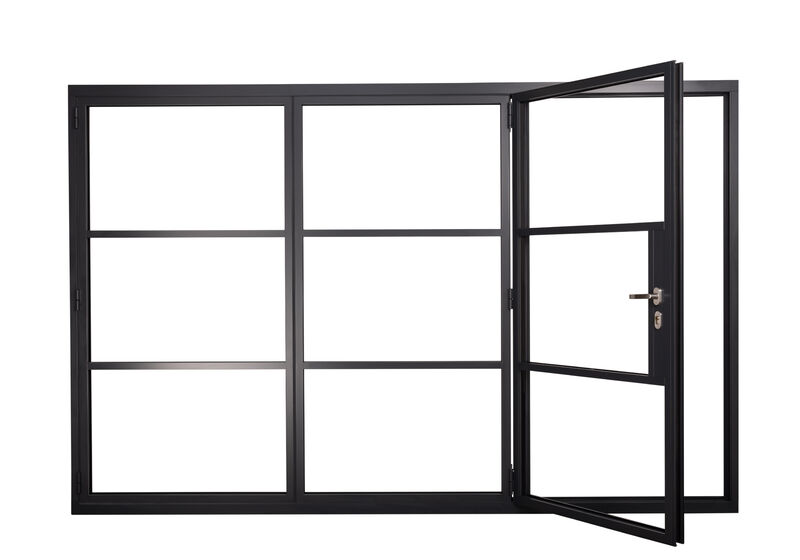
- 3+0 – Three panels, all folding to one side, with a built-in traffic door (a traffic door is a door that can be opened ‘normally’ for quick access).
- 2+1 – Three panels, two folding one way and one opening independently on the opposite side
- 2+2 / 3+1 – Four-panel options; symmetrical or offset stacking
- 3+2 / 4+1 – Five-panel configurations for wider openings
- 3+3 / 5+1 – Six-panel systems for substantial rear elevations
What is a traffic door?
A traffic door, sometimes called a lead door or master door, is the panel you use for everyday access. Rather than folding back the entire bifold system every time you want to step outside, the traffic door opens and latches independently, just like a standard single door.
On odd-number panel configurations like a 3+0 or 5+0, a traffic door is built in automatically. On even-number configurations, the central meeting point serves a similar function. It’s a small detail that makes a significant difference in daily use.
Inward vs. outward opening
- Inward opening keeps the outer face of the door clean but stacked panels take up a little floor space inside when open
- Outward opening keeps your interior clear but requires a clear zone outside for the panels to stack
Neither is inherently better, it depends on your layout and how you use the space.

What are the most popular bifold door configurations?
Some panel setups suit UK homes particularly well. Here are the configurations we see most often across Bristol.
3-panel bifold (3+0 or 2+1)
One of the most popular panel options for medium-sized apertures, typically 2.1m to 3.6m wide. Perfect for the rear kitchen extensions common across Redland, Bishopston and Horfield. In a 3+0, all three panels fold to one side and the built-in traffic door handles everyday access without disturbing the rest of the system.
4-panel bifold (2+2 or 3+1)
A genuinely good balance between wider openings and manageable panel sizes, arguably the most versatile configuration of the lot.
- 2+2 opens symmetrically from the centre, creating a dramatic reveal that suits the larger Victorian terraces found throughout Clifton and Redland
- 3+1 delivers the same wide opening with a dedicated traffic door on one side, a more practical arrangement for day-to-day family life

5-panel bifold (3+2 or 4+1)
For wide rear walls or serious entertaining spaces, the 5-panel system delivers. A 3+2 split opens beautifully from the centre; a 4+1 keeps four panels stacking to one side with a dedicated traffic door on the other. For homes in Totterdown where bold character is everything, a statement frame colour on a 5-panel system can become a genuine architectural feature.
6-panel bifold (3+3 or 5+1)
Six-panel systems suit homeowners with substantial rear elevations and an appetite for dramatic, wall-to-wall openings. A 3+3 configuration creates symmetrical stacking on both sides with central traffic doors that echo the feel of traditional French doors. Ideal for open-plan kitchen-diners where indoor and outdoor spaces are designed to function as one.
Corner bifold configurations
Origin’s bifold systems also support 90-degree corner configurations, removing the need for a fixed corner post and opening up a whole corner of your home. Less common, but spectacular in the right property.
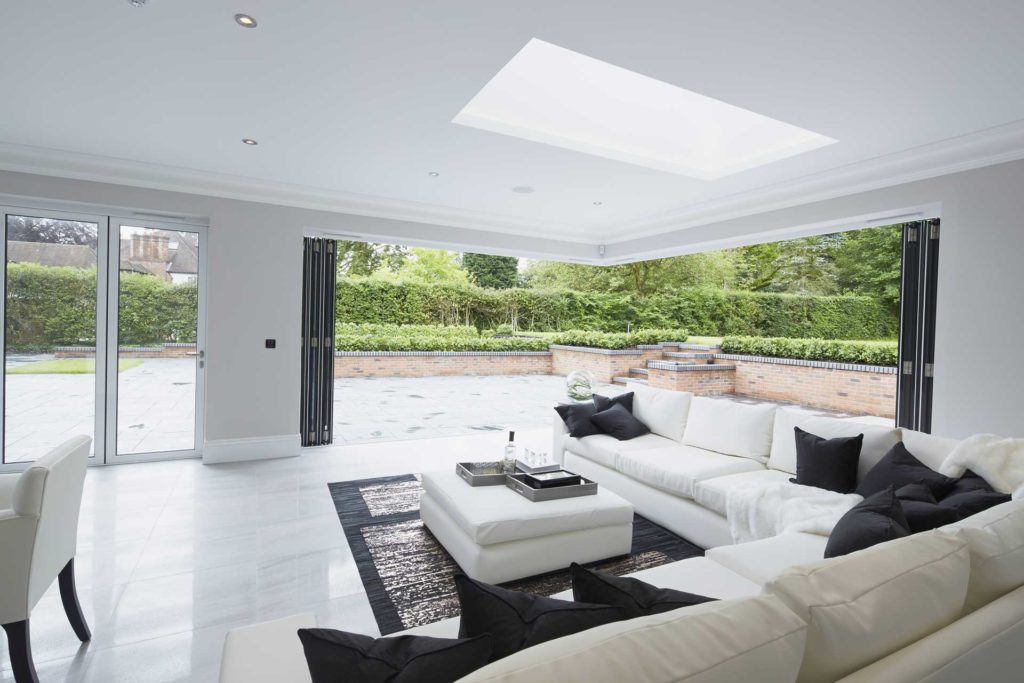
Key considerations when choosing a bifold door configuration
Getting the configuration right takes careful planning. Here are the main things to work through.
Aperture size
Individual panels usually range from 400mm to 1,200mm wide. Divide your total aperture width by the number of panels you’re considering to check the result sits within a sensible range. Our team is always happy to help you work through the maths.
Opening direction and usability
Consider the depth of your patio, whether outdoor furniture sits close to the door, and the flow of your internal floor plan. In a smaller space, inward-opening panels can feel intrusive, outward opening is usually the smarter call.
Traffic door position
The position of your traffic door needs to make sense for how you naturally move through the space. Think about which side feels most intuitive for quick garden access in daily use.
Wall space for stacking
Make sure there’s enough clear wall space on the stacking side, and that nothing sits in the way, such as radiators, light switches or furniture.
Conservation area restrictions
Bristol has a rich mix of conservation areas and listed buildings, from the Georgian streets of Clifton to the Victorian terraces of Montpelier. Some carry restrictions on external door materials, colours and styles. We know the requirements across Bristol’s neighbourhoods inside out and can advise on what’s achievable for your home.
Are bifold doors worth it?
Aluminium experts Origin recently undertook a survey that revealed how bifold doors typically increase the value of a home by up to 10%. As well as the notable return on investment, here are a few more of their celebrated benefits:
Unrivalled connection to outdoor space
When fully open, bifold panels stack completely clear, leaving nothing between your living room and garden but fresh air. This can really change the way you think of and use your home.
A flood of natural light
The large glass area of a bifold system delivers significantly more natural light than standard external doors. Regular exposure to natural light is proven to have several benefits, including improved sleep, better productivity and a happier mood in general, with less stress. The whole family can benefits from these perks.
Smooth, effortless operation
Modern aluminium bifold systems are engineered for smooth operation day in, day out. Precision-engineered rollers and well-balanced door panels make even larger systems feel light and responsive.
Outstanding thermal performance
Today’s aluminium bifold doors feature polyamide thermal breaks within the frame, a barrier that prevents heat from transferring between inside and out. Combined with double or triple glazing, you get a door system that keeps warmth in during winter and heat out during summer.
A U-value measures how much heat passes through a material, the lower the number, the better it insulates. UK building regulations require replacement doors to meet a maximum of 1.4 W/m²K. The Origin OB-36+ achieves as low as 0.78 W/m²K with triple glazing, well beyond what’s required.
What makes aluminium a great bifold door material?
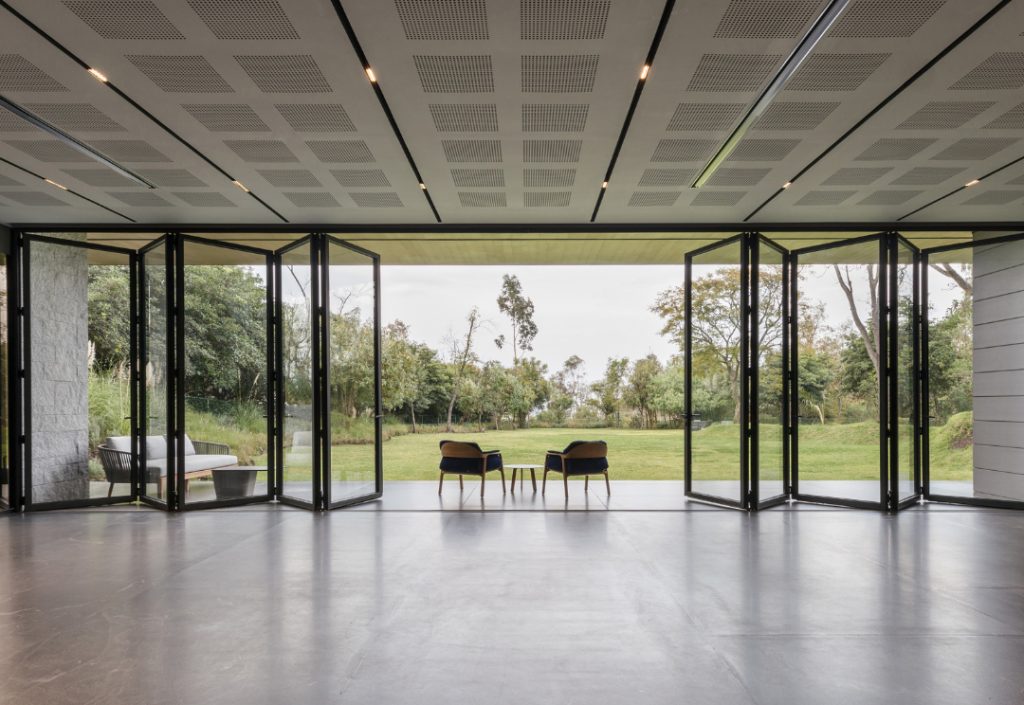
Aluminium is the dominant material choice for bifold doors across UK homes, and for very good reason:
- Slim sightlines: Because aluminium is so strong, you can have slimmer frames and more glass
- Durability: Aluminium doesn’t change shape, performing reliably in the British climate for decades
- Low maintenance: You don’t need to spend long maintaining your investment, all you typically need to do is wipe down the frames occasionally
- Colour versatility: Over 150 RAL colours available with the Origin systems installed by Associated Windows
- Security: Origin systems feature an 8-point multi-point locking mechanism, meeting PAS 24 and Secured by Design standards
- Sustainability: One of the most recyclable materials available
Bifold doors from Associated Windows
As an Origin Premium Partner, we supply and install the full Origin bifold door range across Bristol. That means access to these outstanding systems, amongst others:
- OB-36+ (Soho): A 36mm sightline with an industrial look. Perfect for contemporary Harbourside properties, or any home where the most glass possible is the priority
- OB-49: Based on the thickness of the frame, this 49mm version is in the middle of the offering, balancing slim sightlines with excellent thermal performance. One of our most popular choices across Bristol
- OB-72 (Classic): A robust 72mm profile with a traditional architectural feel, well-suited to period properties in Clifton or Henleaze
All three systems are available across the full range of configuration options in this guide. Every installation includes:
- Over 150 RAL frame colours
- Double or triple glazing options
- Flush, weathered or mobility threshold choices
- Integral blind options
- Up to a 20-year guarantee as an Origin Premium Partner
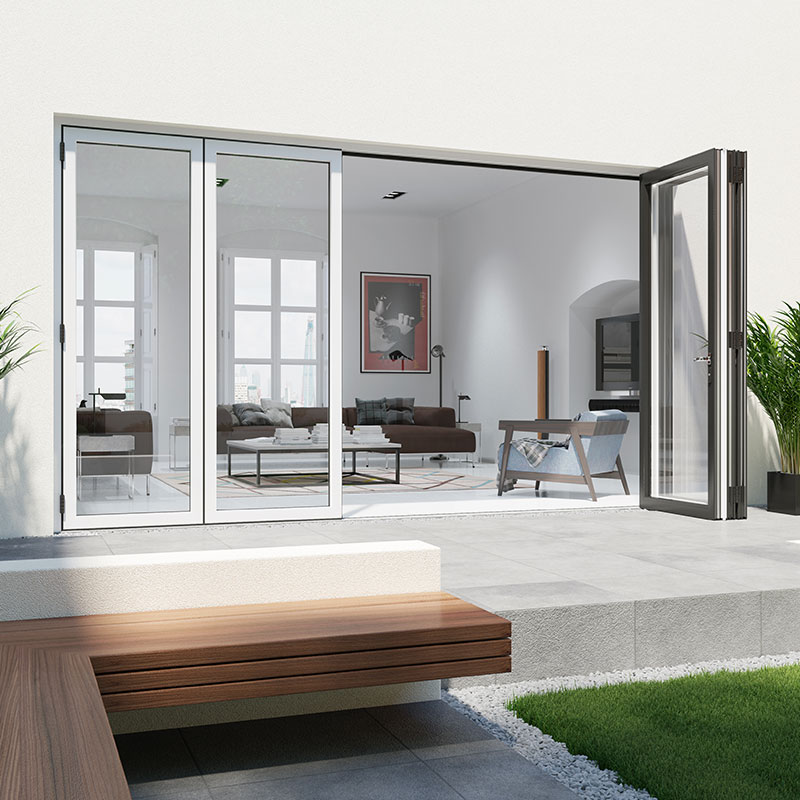
Bifold door FAQs
What is the most popular bifold door configuration?
The 3-panel and 4-panel configurations are the most popular choices for UK homes, offering a good balance of opening width, practical panel sizes and everyday usability, with a built-in traffic door on 3-panel systems making them particularly well-suited to busy family homes.
How many panels do I need?
It depends on your aperture width and preferred panel size. Panels generally work best between 600mm and 1,000mm wide. Divide your total opening width by that range for a realistic panel count, or speak to our team for expert advice tailored to your specific needs.
Can bifold doors be used internally?
Yes, internal bifold doors are a great way of creating flexible, open-plan spaces inside your home. We can advise on the right system for internal use as part of your wider project.
Do bifold doors require planning permission?
In most cases, replacing existing doors with bifold doors falls under permitted development. However, if your property is in a conservation area or is listed, additional restrictions may apply. We’re familiar with the requirements across Bristol’s conservation areas and can help you navigate this.
Why trust Associated Windows?
We’re an independent, Bristol-based installer with years of experience helping homeowners across the city find the right windows, doors and rooflights for their homes. From the period properties of Clifton to the contemporary apartments of the Harbourside, we take a bespoke approach with every project.
As a Which? Trusted Trader, FENSA-registered installer and Origin Premium Partner, we install products of the highest quality, exceeding current industry requirements. All Origin products come with up to a 20-year guarantee, showcasing the confidence that these products will last without issue.
Ready to explore bifold door configurations for your Bristol home? Visit our showroom at 32-34 Gloucester Road North, Bristol, BS7 0SJ, open Monday to Friday 9am-5pm and Saturday 9am-3pm, or call us on 0117 9311777 to speak to our friendly team. We’d love to help you find the perfect layout.